

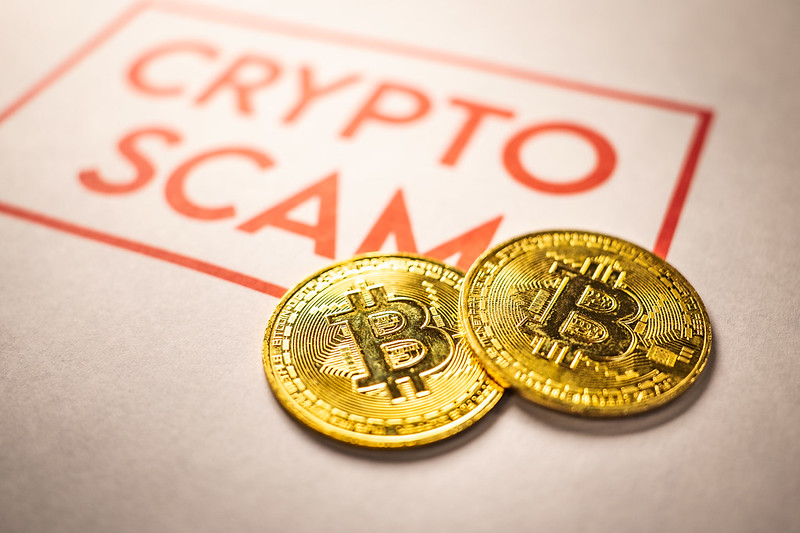
The surge in popularity of Bitcoin and other cryptocurrencies has a hidden dark side. It has led to the rapid growth of a cybercrime industry teeming with various scams. Crafty wrongdoers target unsuspecting Internet users, aiming to deceive them into losing their valuable Bitcoins. The purpose of this article is to enlighten readers about common cryptocurrency-related scams and provide practical tips for safely navigating the world of crypto transactions.
Ponzi Schemes
Some websites claim they have the secret to make your Bitcoin skyrocket overnight, promising unimaginable returns. However, it is crucial to be aware that these claims are often deceptive tactics aimed at swindling your hard-earned money. Entrusting them with your Bitcoin will likely result in total loss.
Protection:
- One should maintain a healthy skepticism towards any investment that boasts of guaranteed returns. It is essential to recognize that investments inherently entail risks, and individuals who make bold claims about sure profits are likely lacking honesty and transparency.
- Legitimate investments generate profits by following a transparent business model. It is essential to be cautious if the mechanism behind an investment’s profitability remains unclear, as this could indicate potential risks or concerns.
- In Ponzi schemes, the success heavily relies on the recruitment of new members. If you ever find yourself being pressured to bring in more people to earn money, it’s a clear indication that you might be dealing with a Ponzi scheme. These fraudulent websites often implement referral programs where existing members can make profits by enticing new customers. It’s essential to be cautious if you come across any URLs containing referral links, like this example: superwebsite.com/?ref=9472.
- Before making any investment, it is advisable to consult the financial regulators in your country. They can provide information on whether the company you are considering is officially registered and if there have been any complaints or actions taken against it.
- Don’t risk more than your budget allows.
Cloud Mining
Cloud mining refers to the process of cryptocurrency mining, wherein a remote data center with shared processing power is utilized. These mining providers offer their mining hardware and computational capabilities for rent to clients. Through this arrangement, clients can mine cryptocurrencies without the need to purchase and maintain expensive mining equipment.
While the concept itself is commendable and entirely legitimate, dishonest individuals frequently initiate deceptive schemes. They allures potential investors with grand promises, only to deliver significantly lower returns than initially claimed, if any, returns.
Protection:
- The website should provide easily understandable and transparent information regarding the mining pool utilized and its management. This encompasses details about their mining facilities, the hardware they employ, and their mining capacity.
- The contract details should be checked thoroughly. In a legitimate cloud mining contract, it is essential to have clear and precise information regarding the cost of the agreement, the allocated processing power, and other related terms. It is advisable to approach any contract with caution if these specific details are not provided accurately.
- To ensure sound guidance, consider consulting with an impartial cloud mining advisor or someone well-versed in cryptocurrency mining.
Bogus Crypto Exchanges
Advertisements that promise to sell Bitcoins at cheap prices or with minimal transaction fees should be approached with caution. These ads could be a tactic used by fraudulent cryptocurrency exchange websites to deceive unsuspecting individuals. Another red flag for scams is the PayPal to BTC exchange ploy.
Websites that engage in this scam typically present users with a form requesting their PayPal email and the desired spending amount. Subsequently, a QR code is generated to authenticate the transaction. Unfortunately, the promised Bitcoins fail to materialize while leaving victims with compromised PayPal accounts instead.
Protection:
- Before engaging with any Bitcoin exchange, it is essential to conduct thorough research. Gain insights by reading reviews from reputable sources and seeking advice from experienced users. Additionally, take the time to explore the exchange’s website for valuable information about the company’s history, physical address, and team members’ names.
- Many countries require crypto exchanges to go through registration processes and adhere to specific regulations. It is essential to verify whether the exchange complies with these regulations in your own country.
- One should exercise caution and refrain from clicking on any questionable links that may attempt to redirect them to an illegitimate platform. It is advisable to always verify the exchange’s URL before logging in.
Fake Wallets
Identifying deceptive Bitcoin wallets can be challenging. While wallets are primarily designed to hold cryptocurrency rather than facilitating trades or executing BTC intelligent contracts, it’s essential to remain cautious. Scammers often employ tactics that prioritize stealing sensitive data over immediate financial gain, potentially leading to the ultimate loss of your assets.
Protection:
- When downloading wallet software, choosing the official website or a reputable app store is crucial. This precaution is essential because rogue wallets often masquerade as the genuine ones, but they are exclusively available on unofficial or unregulated app stores.
- To enhance security, enabling MFA is essential. This process involves providing two forms of identification, typically a password and a verification code.
- If someone is dealing with significant amounts of cryptocurrency, it is recommended that they consider using a hardware wallet. Hardware wallets are physical devices designed to securely store cryptocurrencies offline, ensuring added protection against potential risks.
- To ensure optimal performance, it is vital to regularly update your device and the applications you use. This includes keeping your wallet software, device’s operating system, and security software up to date. Regular updates help enhance functionality and security for a seamless user experience.
- When dealing with a downloadable Bitcoin wallet, it is advisable first carefully to examine the application for potentially harmful code. Platforms like VirusTotal offer valuable assistance by scanning software binaries using multiple antivirus programs simultaneously. Additionally, if the wallet is open-source, one can assess its code on platforms like GitHub. Although some technical knowledge may be required, this examination provides valuable insights into the safety and functionality of the wallet.
- Many cryptocurrency wallets offer a built-in feature allowing users to back up their wallet by creating a seed phrase. This seed phrase serves as a recovery tool in case you encounter any issues accessing your wallet. Remember to store this crucial phrase securely to safeguard your funds.
Good Old Phishing
Phishing, the most common scam in the digital realm, aims to deceive users by leading them to a deceptive website disguised as a reputable and trustworthy service. These fraudulent emails often appear to be from familiar cryptocurrency exchanges or wallet services that you may presently use. Cybercriminals typically gather personal information from past data breaches and employ it in their phishing emails.
Scammers may utilize online advertisements or questionable SEO tactics to steer unsuspecting individuals towards fraudulent Bitcoin exchanges or wallets. These deceptive sites often surface among the top search results when users enter terms like “Buy Bitcoin,” “Bitcoin exchange,” or “Buy Crypto.”
Protection:
- As a general rule, it is advisable to refrain from clicking on links contained in emails. Often, a deceptive link may initially appear genuine but will employ multiple redirection steps with the ultimate intention of directing you to a site controlled by hackers. To mitigate this risk, it is recommended to either directly type URLs into your browser or utilize bookmarked links.
- When dealing with email attachments, exercise caution to ensure your safety. Malicious software is often distributed through such attachments by hackers.
- One should maintain a level of suspicion towards unsolicited communications. When uncertainty arises, it is advisable to verify the email address or phone number and reach out to the company using the contact information provided on their official website.
On-the-spot Crypto Trading Hazards
As Bitcoin theft expands beyond the realm of digital transactions, a global emergence of new laws and regulations is shaping the landscape of cryptocurrency trading. Implementing these changes in certain regions presents hurdles for traditional online buying and selling methods involving Bitcoins. Consequently, this shift in dynamics has prompted traders to seek face-to-face interactions for their transactions within the Bitcoin economy.
Incidents have occurred recently that underscore the potential risks involved in conducting Bitcoin exchanges face-to-face. An illustrative case took place in India where an aspiring entrepreneur fell prey to a robbery while attempting to acquire BTC at an attractively low rate. In hopes of sealing the deal, he arranged to meet the supposed sellers at a local shopping center, only to find himself ambushed and losing $50,000, which he had brought for the transaction.
Protection:
- To enhance safety, avoiding meeting strangers in person for Bitcoin transactions, particularly when carrying substantial amounts of money, is advisable.
- If you find yourself in need, conducting transactions in public places like {coffee shops or shopping centers is advisable. These locations are generally safe because they are often crowded and equipped with surveillance cameras. Additionally, remember to inform others of your whereabouts for added safety.
- Try to have a companion when you go.
- Choose trustworthy platforms that let you pay and get paid securely without revealing your details.
- The platform leverages its reputation and feedback systems to carefully select reliable traders. It emphasizes the importance of thoroughly discussing all trading specifics through encrypted chat before proceeding with any transactions.
- Don’t send coins until the other party has the promised money.
- Trusting your instincts is vital; if something feels off, it’s best to walk away. Prioritizing your safety outweighs any potential missed opportunities in trading.
Pump-and-Dump Schemes
Crypto “pump-and-dump” schemes involve manipulating the price of a cryptocurrency by artificially inflating it through coordinated buying or spreading misleading positive news. Once the price has significantly increased, the manipulators sell off their holdings, leading to a rapid drop in price.
While these schemes can yield substantial profits for scammers, they cause significant losses for those who buy in during the pump. Due to their fraudulent nature, many jurisdictions deem these schemes illegal. However, preventing them presents challenges due to cryptocurrencies’ decentralized and global nature.
Protection:
- Investments should never be hurriedly made based on hype or pressure. Succumbing to the “Fear of Missing Out” can prompt impulsive and ill-advised decisions.
- To mitigate the impact of a poor investment, it is advisable to diversify your investments across various assets. This strategy can help minimize potential risks.
- One should approach “Get Rich Quick” promises with skepticism. If something appears too good to be true, it is likely not genuine.
- To minimize your risk, you can set Stop-Loss Orders that automatically sell your cryptocurrency if its price drops significantly.
Fake Airdrops
Fake airdrops, a prevalent form of cryptocurrency scam, involve deceitful individuals promising free coins to entice unsuspecting victims. These deceptive schemes manipulate participants into revealing sensitive information, such as private keys or personal data, or making small payments under the false pretense of unlocking their supposed rewards. Unfortunately, once the requirements are fulfilled, victims are left empty-handed and deceived. Exploiting people’s desire for effortless gains, scammers create an illusion of enticing giveaways.
Protection:
- One should always verify the legitimacy and reputation of a company before confirming an airdrop. It is recommended to check their official website and social media channels for any announcements or updates.
- Legitimate airdrops never require you to disclose your private keys. Your private key holds utmost importance as it contains sensitive information. It is vital to keep it confidential and refrain from sharing it with anyone.
- When encountering an airdrop that requests excessive personal information, exercise caution, while it may be necessary to provide certain data, it is essential to be wary of unreasonable demands as they could indicate potential risks or scams.
- If an airdrop asks you to send cryptocurrency to receive tokens, it is likely a scam. Legitimate airdrops never require any purchase.
Cryptojacking
Cryptojacking, a type of cybercrime, involves hackers discreetly utilizing the computing resources of others for mining cryptocurrencies. Typically, they achieve this by infecting websites or personal computers with malicious code. When unsuspecting individuals visit compromised sites or install infected software, their computer’s processing power is enlisted to mine crypto without their knowledge.
Consequently, system performance may suffer, power consumption increases, and hardware experiences wear and tear. This devious and unethical method allows hackers to profit from others’ resources while posing significant cybersecurity risks.
Protection:
- One way to safeguard your device is by utilizing a robust and reliable antivirus program. Such software actively detects and thwarts cryptojacking scripts, effectively preventing their execution.
- Use browser add-ons that can block cryptojacking scripts from executing in your browser.
- Keep an eye on your system’s activity. A cryptojacking attack might cause a spike in CPU usage.
- Updates for your operating system and software, including browsers, should be regularly performed to ensure optimal security with the inclusion of necessary patches.
Conclusion
Despite the initial hype around cryptocurrencies calming down, the industry continues to expand with the emergence of new projects. Cryptocurrencies are undoubtedly here to stay and will remain an integral part of our lives. However, as a relatively new form of currency, the crypto world naturally attracts opportunistic scammers. By staying informed about prevalent scams and adhering to recommended protection measures, one can effectively mitigate potential risks associated with trading cryptocurrencies.

RELATED STORIES
MORE ON NEWS
How to Stake Cryptocurrency: A Beginner’s Guide
Introduction Staking cryptocurrency is an increasingly popular method for earning passive income in the crypto space. This guide will walk you through the essentials of staking, helping you understand how it works, its benefits, and how to get started. What is Staking? Staking involves participating in a proof-of-stake (PoS) network by locking up a certain […]

Internet Computer (ICP): Decentralizing the Web
What is the Internet Computer (ICP)? The Internet Computer (ICP) comprises a set of protocols that enable independent data centres worldwide to unite and offer a decentralized alternative to the current centralized Internet cloud providers. The ICP token facilitates governance, rewards network participants for positive behaviour, and pays transaction fees. More Than Digital Money Like […]

What is cryptocurrency Stacks (STX) : A Beginner’s Guide
Introduction Stacks (STX) is a pioneering blockchain project that extends Bitcoin’s capabilities beyond simply being a digital currency into a foundation for decentralized apps (DApps) and smart contracts, all while leveraging Bitcoin’s unmatched security. Thanks to the Stacks blockchain, this transformative technology creates a unique ecosystem where Bitcoin is a store of value and a […]


RELATED STORIES
MORE ON NEWS
How to Stake Cryptocurrency: A Beginner’s Guide
Introduction Staking cryptocurrency is an increasingly popular method for earning passive income in the crypto space. This guide will walk you through the essentials of staking, helping you understand how it works, its benefits, and how to get started. What is Staking? Staking involves participating in a proof-of-stake (PoS) network by locking up a certain […]
Internet Computer (ICP): Decentralizing the Web
What is the Internet Computer (ICP)? The Internet Computer (ICP) comprises a set of protocols that enable independent data centres worldwide to unite and offer a decentralized alternative to the current centralized Internet cloud providers. The ICP token facilitates governance, rewards network participants for positive behaviour, and pays transaction fees. More Than Digital Money Like […]
What is cryptocurrency Stacks (STX) : A Beginner’s Guide
Introduction Stacks (STX) is a pioneering blockchain project that extends Bitcoin’s capabilities beyond simply being a digital currency into a foundation for decentralized apps (DApps) and smart contracts, all while leveraging Bitcoin’s unmatched security. Thanks to the Stacks blockchain, this transformative technology creates a unique ecosystem where Bitcoin is a store of value and a […]